Quick Answer
Buying waterfront for a boat means checking more than square footage: dock-side water depth, seawall age and condition, bridge clearance, hurricane exposure, and whether the community includes a private marina. If you plan to dock a real boat, all of it affects which homes actually work for you.
65 ftStandard fixed bridge clearance on Florida's Atlantic ICW
56 ftClearance at the Julia Tuttle Causeway, Miami's one exception
50–60 yrsAge of most original Miami-Dade seawalls today
120 ftMax yacht length at Cocoplum & Deering Bay private marinas
1. The Vocabulary You’ll Hear While Touring Waterfront Homes
If you're new to boat ownership, a few terms will come up on nearly every showing. Knowing them upfront makes the process a lot less confusing:
- Draft: how deep the boat sits in the water — the number that determines whether it can even reach your dock.
- Keel: the structural fin along the bottom of a sailboat's hull, usually the deepest point and the number that sets your minimum water depth.
- Beam: the boat's width, relevant to slip width and how tight a turn you'll have in a narrow canal.
- Air draft: the vessel's height above the waterline, including mast, tower, or antennas — the number that determines whether it clears a fixed bridge.
- Vessel classes: from dinghies and personal watercraft, through sport-fishers and sailboats, up to yachts (typically 40 ft+) and superyachts/megayachts (generally 78 ft/24 m and up).
2. Water Depth and Dock Access
Before you get attached to a property, ask about the water in front of it — not just the view of it.
What to confirm before you write an offer
- Dock-side depth at mean low water, not just at high tide — a boat that fits comfortably at high tide can ground out twice a day if depth wasn't checked at low water.
- Channel depth from the dock out to open water, since a deep-water dock behind a shallow canal doesn't solve the problem.
- Tidal swing in the area, which affects both your draft clearance and how dock height and lift height need to be set.
"How deep does the water need to be behind my house for a big boat?"
It depends entirely on your vessel's draft, not its length. A sport-fisher and a sailboat of the same length can need very different depths — the sailboat's keel is usually the deepest point on the boat. I always confirm this before we tour anything, so we're not wasting your time on homes that won't work.
3. Do You Need a License to Operate Your Boat?
This is one of the most misunderstood parts of boat ownership, and worth getting exactly right before you buy.
The line that actually matters: private use vs. commercial use
Operating a private yacht for personal use generally does not require a captain's license, no matter the size. Licensing requirements are triggered by commercial or charter use, not by length alone.
- OUPV / "Six-Pack": required to carry paying passengers (up to six) on an uninspected vessel up to about 65 feet.
- Master license: tiered by gross tonnage (25-, 50-, 100-, 200-ton), required for larger commercial and charter operations.
- Recreational documentation exemption: yachts over 300 gross registered tons used solely for recreational purposes can be U.S.-flag documented without the heavier commercial inspection and manning rules that apply to charter vessels of that size.
What buyers often confuse this with: insurance requirements
Insurance carriers are a separate story, and this is likely where the old "40 feet and up" rule of thumb came from. When you move up significantly in boat size, insurers commonly require a set number of hours — sometimes a full season — with an approved, named captain aboard before covering you solo, and may also require a completed safety course. A USCG captain's license or a Yachtmaster qualification, even when not legally required, often earns a better premium.
4. Docks, Seawalls, Davits, and Lifts
Seawalls
There is no single statewide law requiring seawall inspection at a set age, though this is changing — Miami Beach and Broward County both now have ordinance-driven deadlines. Best practice: a professional structural inspection every three to five years, tightening to every one to two years for walls over 40 years old, in high-traffic areas, or with prior repairs. This matters acutely in Miami-Dade, where most original seawalls are now 50 to 60 years old. On any waterfront purchase, you and your lender should expect an engineer-sealed condition report before closing — I'll make sure that's part of your due diligence.
Davits and boat lifts
Capacity varies enormously by system type:
| System | Typical Capacity | Best For |
|---|
| Dinghy davit / passarelle | ~450–800 lbs | Tenders, small dinghies |
| Standard cradle boat lift | 2,000–36,000 lbs | Center consoles, sport-fishers, mid-size cruisers |
| Elevator yacht lift | Up to ~72,000–90,000 lbs | Tight canals, seawall-mounted, larger yachts |
| Heavy cradle / yacht lift | Up to ~300,000 lbs | Serious megayacht infrastructure |
The elevator-style system you may have seen — where the boat drives in and is lifted mechanically along tracks on the seawall — is exactly this: an elevator yacht lift. Realistic capacity always depends as much on the seawall and piling structure supporting it as on the lift's own rating.
5. Navigation and Access Limits
Fixed bridges over Florida's Atlantic Intracoastal Waterway generally offer 65 feet of vertical clearance above mean high water — except the Julia Tuttle Causeway in Miami, which clears only 56 feet. A tall sailboat or sport-fisher that clears every other bridge on the coast can still get stopped cold at that one crossing. Vessels with air draft over roughly 85–100 feet typically cannot transit fixed bridges at all and stay confined to the Intracoastal or offshore routes.
You should also understand speed restrictions near your future home: idle-speed/no-wake zones require operating at the slowest speed that maintains steering, with no wake produced, and are common directly in front of residential seawalls. Manatee protection zones, established under Florida's Manatee Sanctuary Act, add seasonal or year-round speed limits on top of that in many waterways.
6. Storm Resilience
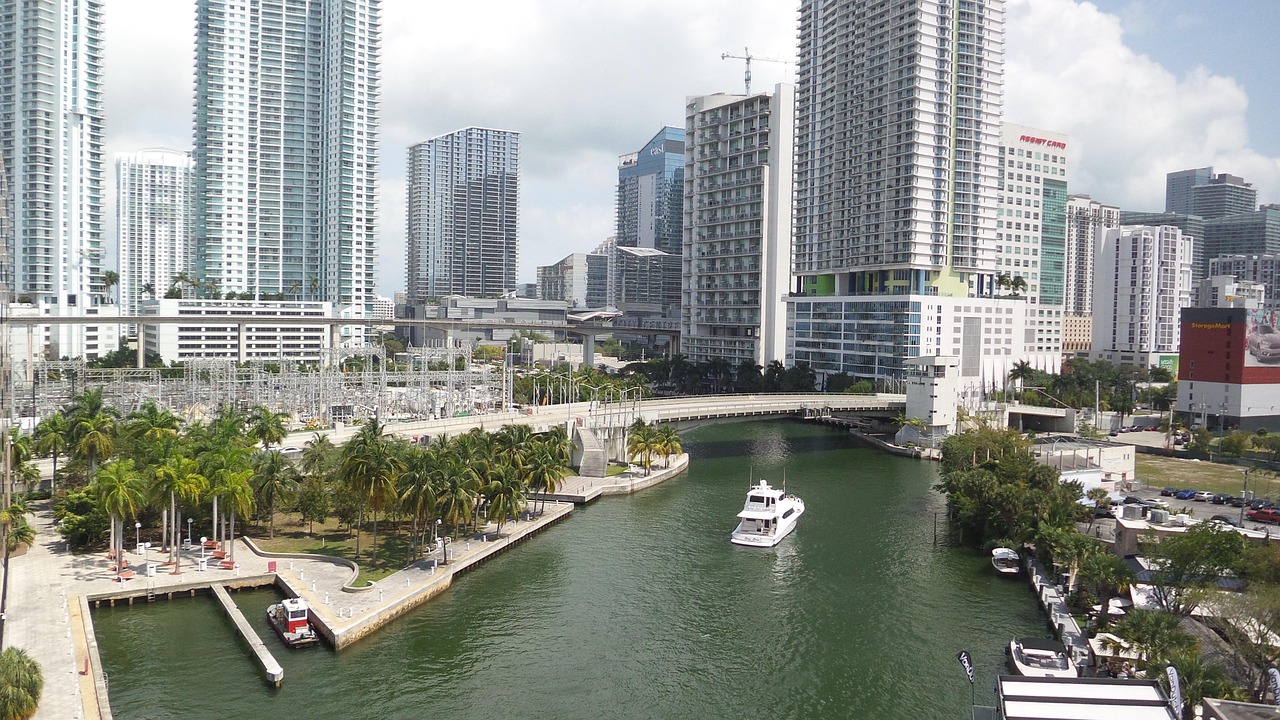
 Image by Wilhelm Eder from Pixabay
A "hurricane hole" is a real term of art: a snug harbor protected on all sides from open fetch and unrestricted storm surge. A property on a natural cove or a deep, well-protected inland canal is a genuine value differentiator for a boat owner, and it's true that owners in a strong hurricane hole are sometimes less inclined to move the boat before a smaller storm.
Two things worth knowing honestly before you buy:
- Position in the canal matters — boats near the mouth of a canal are more exposed than those near the head, and a poorly secured neighbor's boat can become the biggest threat to yours.
- Protection is relative, not absolute — even the best hurricane holes see damage in a major storm, and Category 3 and above generally still warrants a full haul-out for displacement vessels.
7. Marina Membership Communities
Some of the most desirable addresses in South Florida aren't just waterfront — they come with access to a private, members-only marina, which is its own cost layer beyond the home purchase.
- Cocoplum (Coral Gables): nearly 200 deep-water slips through the private Cocoplum Yacht Club, with deep-water canals and docks accommodating yachts up to 120 feet.
- Deering Bay Yacht & Country Club (Coral Gables): three private, deep-water marinas offering dockage from 25 to 120 feet, membership required and separate from golf/country club membership; current estimates run well into six figures for combined initiation and dues.
- Fisher Island and newer super-yacht marina buildings: represent the top tier of this model, with some private marinas built to accommodate vessels up to 300 feet.
If you don't have (or don't want) a private dock, you're not necessarily priced out of serious boating: dry-stack marina storage, like Rickenbacker Marina's dry rack storage for vessels up to roughly 40,000 lbs, alongside wet slips for vessels up to about 120 feet, is a normal, well-used part of the South Florida boating lifestyle.
Frequently Asked Questions
Do I need a captain's license to own a large yacht?
Not for private, personal use, regardless of length. Licensing is only legally required for commercial or charter use. Insurance carriers, however, often require a set number of supervised hours or a safety course before covering you solo on a significantly larger boat.
What is a hurricane hole and why does it matter for waterfront property?
A hurricane hole is a snug harbor protected on all sides from open fetch and storm surge. A cove or deep inland canal genuinely lowers a boat's storm risk compared to open water, though it's not a guarantee against a major hurricane.
How often should a seawall be inspected?
No single statewide age-based law exists, though some cities now mandate deadlines. Best practice is every three to five years, tightening for walls over 40 years old — and most original Miami-Dade seawalls are already 50 to 60 years old.
What is the tallest boat that can pass under Florida's Intracoastal bridges?
Fixed ICW bridges generally clear 65 feet, except Miami's Julia Tuttle Causeway at 56 feet. Vessels with air draft over roughly 85–100 feet typically can't transit fixed bridges at all.
What's the difference between a boat lift and dry storage?
A lift or davit keeps the boat at your home, out of the water between uses, ranging from a few hundred pounds up to 72,000+ pounds for elevator yacht lifts. Dry storage is an off-site marina alternative, useful when a property lacks dock infrastructure.
What is a marina membership community like Cocoplum or Deering Bay?
A gated community built around a private, members-only marina. Cocoplum and Deering Bay both accommodate vessels up to 120 feet and require a separate marina or club membership, often a significant initiation fee plus annual dues, on top of the home purchase.

Joaquin Gutierrez
Licensed Florida Real Estate Broker BK0625118 · 30+ years in South Florida real estate
Thinking About a Home That Can Handle Your Boat?
I'll help you figure out dock depth, seawall condition, and bridge access before you fall for the wrong house. Let's talk about what actually works for your vessel.
Respuesta Rápida
Comprar frente al agua para tu bote exige revisar más que los metros cuadrados: la profundidad del agua junto al muelle, el estado y la edad del seawall, la altura de los puentes, la exposición a huracanes, y si la comunidad incluye una marina privada. Si planeas atracar una embarcación real, todo esto determina qué casas realmente te sirven.
65 piesAltura estándar de puentes fijos en el ICW Atlántico de Florida
56 piesAltura del puente Julia Tuttle Causeway en Miami, la excepción
50–60 añosEdad de la mayoría de los seawalls originales en Miami-Dade
120 piesEslora máxima en las marinas privadas de Cocoplum y Deering Bay
1. El Vocabulario Que Escucharás al Visitar Casas Frente al Agua
Si eres nuevo en el mundo náutico, algunos términos aparecerán en casi cada visita. Conocerlos de antemano hace todo el proceso mucho más fácil:
- Calado (draft): qué tan profundo se hunde el bote en el agua — el número que determina si puede llegar a tu muelle.
- Quilla (keel): la aleta estructural bajo el casco de un velero, generalmente el punto más profundo de la embarcación y el que fija la profundidad mínima que necesitas.
- Manga (beam): el ancho del bote, relevante para el ancho del slip y qué tan cerrado será el giro en un canal estrecho.
- Altura libre (air draft): la altura de la embarcación sobre la línea de flotación, incluyendo mástil, torre o antenas — el número que determina si pasa bajo un puente fijo.
- Clases de embarcación: desde botes inflables y motos acuáticas, pasando por lanchas deportivas y veleros, hasta yates (típicamente desde 40 pies) y superyates o megayates (generalmente desde 24 metros / 78 pies).
2. Profundidad del Agua y Acceso al Muelle
Antes de encariñarte con una propiedad, pregunta por el agua frente a la casa — no solo por la vista.
Qué confirmar antes de hacer una oferta
- Profundidad junto al muelle en marea baja promedio, no solo en marea alta — un bote que cabe cómodamente en marea alta puede encallar dos veces al día si no se midió en marea baja.
- Profundidad del canal desde el muelle hasta aguas abiertas, ya que un muelle de aguas profundas detrás de un canal poco profundo no resuelve nada.
- La variación de marea en la zona, que afecta tanto el calado disponible como la altura a la que deben instalarse el muelle y el elevador.
"¿Qué tan profunda debe ser el agua detrás de mi casa para un bote grande?"
Depende por completo del calado de tu embarcación, no de su eslora. Una lancha deportiva y un velero de la misma longitud pueden necesitar profundidades muy distintas — la quilla del velero suele ser el punto más profundo del bote. Yo siempre confirmo esto antes de visitar propiedades, para no hacerte perder tiempo con casas que no van a funcionar.
3. ¿Necesitas Licencia Para Operar Tu Bote?
Este es uno de los puntos más malentendidos sobre tener un bote, y vale la pena aclararlo antes de comprar.
La verdadera línea divisoria: uso privado versus uso comercial
Operar un yate privado para uso personal generalmente no requiere licencia de capitán, sin importar el tamaño. Las licencias se activan por uso comercial o de chárter, no por la eslora por sí sola.
- OUPV / "Six-Pack": requerida para llevar hasta seis pasajeros pagantes en una embarcación no inspeccionada de hasta unos 65 pies.
- Licencia Master: escalonada por tonelaje bruto (25, 50, 100, 200 toneladas), requerida para operaciones comerciales y de chárter más grandes.
- Exención de documentación recreativa: yates de más de 300 toneladas de registro bruto usados exclusivamente para fines recreativos pueden documentarse bajo bandera estadounidense sin las reglas comerciales más estrictas de inspección y tripulación.
Con qué suele confundirse esto: los requisitos de las aseguradoras
Las aseguradoras son un tema aparte, y probablemente de aquí viene la vieja regla de "40 pies en adelante". Cuando subes significativamente de tamaño de embarcación, las aseguradoras suelen exigir un número determinado de horas — a veces una temporada completa — con un capitán aprobado a bordo antes de cubrirte operando solo, y a veces exigen también un curso de seguridad. Una licencia de capitán USCG o una calificación Yachtmaster, aunque no sea obligatoria por ley, suele traducirse en una prima más baja.
4. Muelles, Seawalls, Davits y Elevadores
Seawalls
No existe una sola ley estatal que exija inspección del seawall a determinada edad, aunque esto está cambiando — Miami Beach y el condado de Broward ya tienen plazos establecidos por ordenanza. La mejor práctica: una inspección estructural profesional cada tres a cinco años, con mayor frecuencia (uno a dos años) para muros de más de 40 años, en zonas de alto tráfico náutico o con reparaciones previas. Esto es especialmente relevante en Miami-Dade, donde la mayoría de los seawalls originales ya tienen entre 50 y 60 años. En toda compra frente al agua, tú y tu prestamista deben esperar un informe de condición sellado por un ingeniero antes del cierre — yo me aseguro de que esto forme parte de tu debida diligencia.
Davits y elevadores de botes
La capacidad varía enormemente según el tipo de sistema:
| Sistema | Capacidad típica | Ideal para |
|---|
| Davit para bote auxiliar | ~450–800 lbs | Botes auxiliares, dinghies pequeños |
| Elevador de cuna estándar | 2,000–36,000 lbs | Center consoles, lanchas deportivas, cruceros medianos |
| Elevador tipo "ascensor" (elevator lift) | Hasta ~72,000–90,000 lbs | Canales estrechos, montado en seawall, yates más grandes |
| Elevador pesado / yate | Hasta ~300,000 lbs | Infraestructura para megayates |
El sistema tipo elevador donde el bote entra manejando y es levantado mecánicamente sobre rieles montados en el seawall es exactamente esto: un elevator yacht lift. La capacidad real siempre depende tanto de la estructura del seawall y los pilotes que lo soportan como de la capacidad nominal del propio elevador.
5. Límites de Navegación y Acceso
Los puentes fijos sobre el Intracoastal Atlántico de Florida generalmente ofrecen 65 pies de altura libre sobre la marea alta promedio — excepto el Julia Tuttle Causeway en Miami, que solo tiene 56 pies. Un velero alto o una lancha deportiva que pasa bajo todos los demás puentes de la costa puede quedar completamente detenido en ese único cruce. Las embarcaciones con altura libre de más de aproximadamente 85 a 100 pies típicamente no pueden transitar puentes fijos y permanecen limitadas al Intracoastal o a rutas mar afuera.
También debes entender las restricciones de velocidad cerca de tu futura casa: las zonas de "velocidad mínima, sin estela" exigen operar a la velocidad más baja que mantenga el control de dirección, sin generar estela, y son comunes justo frente a los seawalls residenciales. Las zonas de protección de manatíes, establecidas bajo la ley estatal de protección del manatí, añaden límites de velocidad estacionales o permanentes en muchas vías navegables.
6. Resiliencia Ante Huracanes
Imagen de Wilhelm Eder en Pixabay
Un "hurricane hole" es un término técnico real: un puerto protegido en todos los lados contra el oleaje abierto (fetch) y la marejada ciclónica sin restricción. Una propiedad en una cala natural o un canal interior profundo y bien protegido representa una verdadera ventaja de valor para el dueño de un bote, y es cierto que algunos dueños en un buen hurricane hole son menos propensos a mover la embarcación antes de una tormenta menor.
Dos puntos que vale la pena conocer con honestidad antes de comprar:
- La posición dentro del canal importa — los botes cerca de la boca del canal están más expuestos que los del fondo, y el bote mal asegurado de un vecino puede convertirse en la mayor amenaza para el tuyo.
- La protección es relativa, no absoluta — incluso los mejores hurricane holes sufren daños en una tormenta mayor, y de categoría 3 en adelante generalmente sigue siendo recomendable sacar la embarcación del agua por completo.
7. Comunidades con Marina Privada
Algunas de las direcciones más deseadas del sur de Florida no solo están frente al agua — incluyen acceso a una marina privada exclusiva para miembros, lo cual representa un costo adicional aparte de la compra de la vivienda.
- Cocoplum (Coral Gables): casi 200 slips de aguas profundas a través del Cocoplum Yacht Club privado, con canales y muelles que reciben yates de hasta 120 pies.
- Deering Bay Yacht & Country Club (Coral Gables): tres marinas privadas de aguas profundas con espacio para embarcaciones de 25 a 120 pies, membresía requerida y separada de la del club de golf; los estimados actuales superan ampliamente los seis dígitos entre iniciación y cuotas combinadas.
- Fisher Island y los nuevos edificios con marina para superyates: representan el nivel más alto de este modelo, con algunas marinas privadas diseñadas para embarcaciones de hasta 300 pies.
Si no tienes (o no quieres) un muelle privado, no quedas necesariamente fuera del boating serio: el almacenamiento en seco de marina, como el de Rickenbacker Marina para embarcaciones de hasta unas 40,000 libras, junto con slips húmedos para embarcaciones de hasta unos 120 pies, es una parte normal y muy utilizada del estilo de vida náutico del sur de Florida.
Preguntas Frecuentes
¿Necesito licencia de capitán para tener un yate grande?
No, para uso privado y personal, sin importar el tamaño. La licencia solo es obligatoria por ley para uso comercial o de chárter. Sin embargo, las aseguradoras suelen exigir un número determinado de horas supervisadas o un curso de seguridad antes de cubrirte operando solo un bote significativamente más grande.
¿Qué es un "hurricane hole" y por qué importa para una propiedad frente al agua?
Es un puerto protegido en todos los lados contra oleaje abierto y marejada ciclónica. Una cala o un canal interior profundo reduce realmente el riesgo de la embarcación frente a aguas abiertas, aunque no es garantía contra un huracán mayor.
¿Cada cuánto debe inspeccionarse un seawall?
No existe una sola ley estatal basada en la edad, aunque algunas ciudades ya exigen plazos. La mejor práctica es cada tres a cinco años, con mayor frecuencia para muros de más de 40 años — y la mayoría de los seawalls originales de Miami-Dade ya tienen entre 50 y 60 años.
¿Cuál es el bote más alto que puede pasar bajo los puentes del Intracoastal de Florida?
Los puentes fijos del ICW generalmente tienen 65 pies de altura libre, excepto el Julia Tuttle Causeway en Miami con 56 pies. Las embarcaciones con altura libre de más de 85 a 100 pies típicamente no pueden pasar por ningún puente fijo.
¿Cuál es la diferencia entre un elevador de bote y el almacenamiento en seco?
Un elevador o davit mantiene el bote en tu propiedad, fuera del agua entre usos, con capacidades desde unos cientos de libras hasta más de 72,000 libras en los elevadores tipo "ascensor". El almacenamiento en seco es una alternativa fuera del sitio, en una marina, útil cuando la propiedad no tiene infraestructura de muelle.
¿Qué es una comunidad con marina privada como Cocoplum o Deering Bay?
Una comunidad cerrada construida alrededor de una marina privada exclusiva para miembros. Cocoplum y Deering Bay reciben embarcaciones de hasta 120 pies y requieren una membresía de marina o club aparte, a menudo con una cuota de iniciación considerable más cuotas anuales, además de la compra de la vivienda.
Joaquin Gutierrez
Broker de Bienes Raíces Licenciado en Florida BK0625118 · Más de 30 años en el sur de Florida
¿Buscas una Casa Que Pueda Con Tu Bote?
Te ayudo a evaluar la profundidad del muelle, el estado del seawall y el acceso por puentes antes de que te enamores de la casa equivocada. Hablemos de lo que realmente funciona para tu embarcación.