Pests, Termites, Mold, and Wood Damage During a Home Sale: Who Pays and What Happens Next?
Termites, mold, carpenter ants, wood rot, and other pest issues can scare buyers and complicate a sale. The real question is not only what was found. The real question is who benefits from fixing it, who is responsible, and what must happen for the transaction to close.
Direct Answer
The Bigger Issue: It Is Not Always “Just Bugs”
When a buyer hears the word “termites,” they often imagine the worst. But in Florida, pest and moisture issues are common. The question is whether the issue is active, structural, disclosed, repairable, financeable, insurable, and properly documented.
The best real estate question is:
This is where buyers and sellers make costly mistakes. A seller may refuse a reasonable repair and lose the buyer. A buyer may overreact to old termite evidence and lose a good home. An inexperienced agent may treat all pest issues the same, when they are not the same.
What Is a WDO Report?
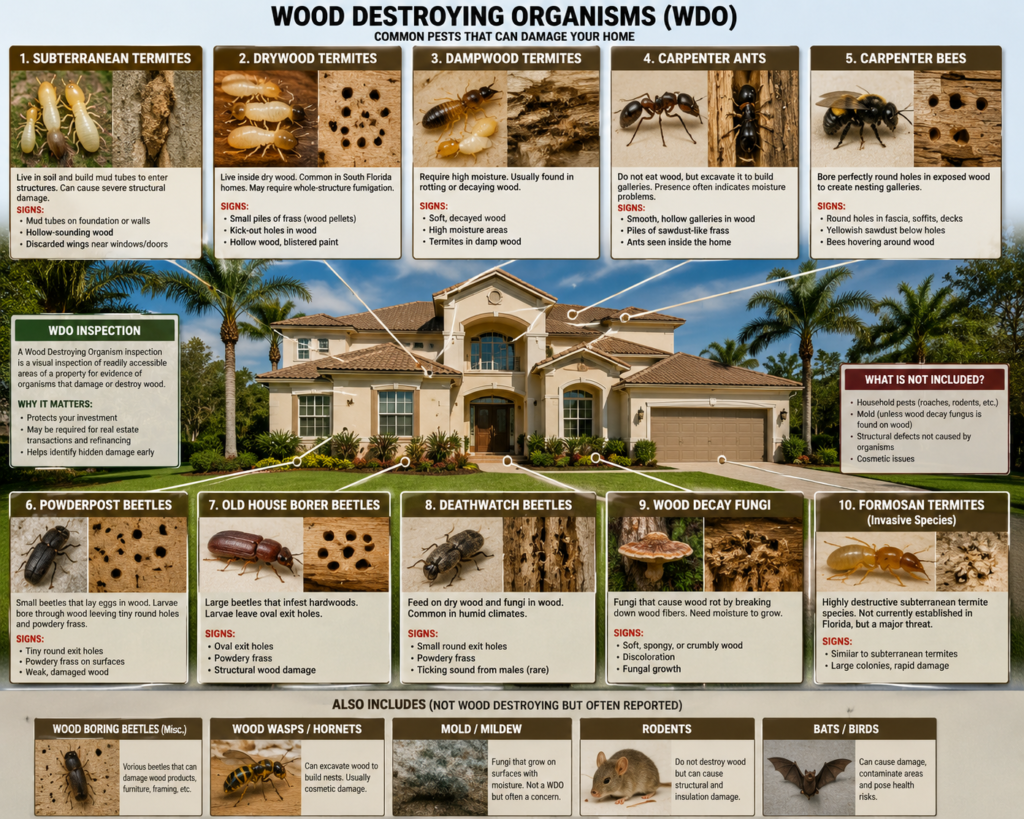
WDO means Wood-Destroying Organism. In Florida real estate, a WDO inspection report is commonly used to identify visible evidence of organisms that damage wood.
A WDO inspection may involve issues such as:
- Subterranean termites
- Drywood termites
- Wood-boring beetles
- Carpenter ants
- Wood decay fungi
- Other visible wood-destroying conditions
Types of Termites and Why They Matter
Subterranean Termites
These termites usually live underground and often enter through soil contact, cracks, moisture points, or foundation gaps. They can cause serious structural damage if ignored.
Drywood Termites
Common in South Florida. They can live inside dry wood and may require localized treatment or tenting, depending on severity and location.
Dampwood Termites
Less common in standard residential transactions, but often connected to wet, decaying, or moisture-damaged wood.
Case Study: Drywood Termites Found During Inspection
Scenario: A buyer is purchasing a single-family home in Miami-Dade. During the inspection period, a pest company finds evidence of drywood termite activity in the attic and fascia.
Problem: The buyer wants the seller to tent the property before closing. The seller argues the home is being sold “as-is.”
Real Negotiation: The seller may not be forced to repair under an as-is contract, but the buyer may cancel during the inspection period. If the seller wants to keep the sale alive, treatment, a credit, a price reduction, or escrow arrangement may become part of the negotiation.
Best Outcome: The seller agrees to tent before closing and provides a transferable warranty. The buyer accepts responsibility for minor cosmetic repairs after closing.
Other Wood-Destroying or Pest Issues
Carpenter Ants
Carpenter ants do not eat wood like termites, but they excavate wood to create galleries. Their presence often points to moisture-damaged wood, leaks, or rotting areas.
Carpenter Bees
Carpenter bees bore into exposed wood such as fascia, soffits, decks, pergolas, and trim. The damage may appear small, but repeated activity can weaken exposed wood and invite moisture intrusion.
Powderpost Beetles
Powderpost beetles can damage wood products and leave small exit holes with powder-like residue. In older homes, the key issue is whether the infestation is active or old.
Wood Rot and Fungi
Wood rot is often connected to moisture. A pest report may identify wood-decay fungi, but the deeper issue may be a roof leak, plumbing leak, poor drainage, failed flashing, or long-term humidity exposure.
Mold Is Usually a Symptom, Not the Root Problem
Mold needs moisture. If mold appears inside a property, the first question should not be only “How do we remove it?” The better question is “Where is the moisture coming from?”
Common moisture sources include:
- Roof leaks
- AC condensation leaks
- Plumbing leaks
- Window leaks
- Poor bathroom ventilation
- Flooding or storm intrusion
- High indoor humidity
- Vacant homes with poor air circulation
Case Study: Mold Behind a Closet Wall
Scenario: A buyer notices a musty smell during inspection. The inspector finds moisture behind a closet wall near a bathroom.
Initial Reaction: The buyer wants a large credit for mold remediation.
Real Issue: The mold is not the first problem. The first problem is the leaking shower valve behind the wall.
Proper Sequence: Fix the plumbing leak, dry the affected area, remove impacted materials if needed, remediate properly, and then rebuild.
Negotiation Result: The seller may agree to repair the leak and provide a credit for remediation, or the buyer may request a price reduction and take responsibility after closing.
Who Pays? The Practical Florida Answer
| Situation | Who Often Pays? | Why | Strategy |
|---|---|---|---|
| Known termite issue before listing | Seller | The seller knew or should address it before marketing. | Disclose, treat, document, and price correctly. |
| Termites found during inspection | Negotiated | Buyer may cancel or request treatment/credit. | Focus on active infestation, scope, and closing impact. |
| Old termite damage, no active infestation | Negotiated or buyer accepts | Old evidence is not the same as active damage. | Request documentation and evaluate structural impact. |
| Mold caused by active leak | Usually seller if discovered before closing | The leak may affect habitability, insurance, or financing. | Repair source first, then address remediation. |
| Minor pest treatment | Often seller or buyer | Depends on cost and leverage. | Do not kill a deal over a small treatment issue. |
| Lender-required repair | Usually seller or negotiated | Loan may not close unless corrected. | Resolve before closing or structure acceptable escrow if allowed. |
| Issue discovered after closing | Usually buyer, unless nondisclosure/fraud applies | Post-closing claims depend on facts and proof. | Review disclosures, inspection reports, and legal options. |
Insurance: Does Homeowners Insurance Cover Termites or Mold?
Termite Damage
In many cases, homeowners insurance does not cover termite damage because it is usually considered a maintenance issue rather than a sudden accidental loss.
Mold
Mold coverage depends heavily on the policy and the cause. Mold from a sudden covered plumbing event may be treated differently than mold from long-term neglect, humidity, or an unrepaired leak.
Disclosure: “As-Is” Does Not Mean “Say Nothing”
In Florida, selling a home “as-is” does not give a seller permission to hide known material defects. If a seller knows about a hidden issue that materially affects the value of the property and the buyer cannot easily discover it, nondisclosure can become a serious problem.
Buyer Strategy During the Inspection Period
A buyer should not automatically cancel because a pest or mold issue appears. The smarter approach is to classify the problem.
1. Identify
What exactly was found? Termites, mold, moisture, rot, ants, bees, beetles, or old damage?
2. Confirm
Is it active, inactive, treated, repaired, structural, cosmetic, or still unknown?
3. Negotiate
Request treatment, repair, credit, price reduction, documentation, warranty, or cancellation.
Buyer Example
Bad Move: Buyer demands $25,000 because the report mentions old termite evidence.
Better Move: Buyer requests a pest specialist opinion, asks whether activity is active, confirms prior treatment, evaluates visible damage, and then negotiates based on actual cost and risk.
Seller Strategy Before Listing
Sellers should not wait for a buyer to discover obvious pest, moisture, or mold problems. Once the issue is discovered during the buyer’s inspection, the seller loses control of the story.
Smart Seller Steps
- Inspect visible wood damage before listing.
- Repair roof leaks, plumbing leaks, and AC drainage issues.
- Address active infestations early.
- Keep invoices, warranties, and treatment records.
- Disclose known issues properly.
- Price the property realistically if repairs are not being completed.
Major Case Studies
Case Study 1: Seller Pays to Save the Deal
Facts: A buyer finds active drywood termites after inspection. The property is otherwise priced well and the buyer still wants the home.
Conflict: Seller says the home is “as-is.” Buyer threatens to cancel.
Resolution: Seller agrees to tent the property before closing and provides warranty documentation.
Lesson: Sometimes the seller pays not because the contract automatically forces it, but because losing the buyer costs more.
Case Study 2: Buyer Accepts Credit Instead of Repair
Facts: Inspection finds minor fascia damage from carpenter bees and old drywood termite evidence.
Conflict: Buyer wants repairs, but seller does not want contractors delaying closing.
Resolution: Seller gives a closing credit, and buyer completes repairs after closing.
Lesson: Credits can work when the lender allows them and the issue does not prevent closing.
Case Study 3: Mold Issue Becomes a Roof Issue
Facts: Mold appears in a bedroom closet. The buyer initially asks for mold remediation only.
Real Finding: The roof has an active leak near a valley.
Resolution: Seller repairs the roof leak and provides a credit toward interior remediation.
Lesson: Mold cleanup without correcting the source is not a complete solution.
Case Study 4: Post-Closing Discovery
Facts: Buyer discovers severe termite damage two months after closing.
Question: Who pays?
Answer: Usually the buyer pays after closing unless there is evidence the seller knew and failed to disclose a material hidden defect.
Lesson: Buyers should inspect carefully before closing. Sellers should disclose honestly to avoid post-closing disputes.
Practical Checklist for Buyers
- Order a full home inspection.
- Ask whether a WDO inspection is appropriate.
- Review seller disclosures carefully.
- Ask for prior termite treatment records.
- Check for transferable warranties.
- Ask whether damage is active or old.
- Separate treatment cost from repair cost.
- Verify lender and insurance requirements.
- Negotiate based on facts, not fear.
Practical Checklist for Sellers
- Do not hide known pest, mold, or moisture issues.
- Fix moisture sources before listing.
- Keep all pest treatment records.
- Document repairs with invoices and photos.
- Disclose known material issues.
- Consider pre-listing inspections for older homes.
- Price correctly if selling with known defects.
- Do not assume “as-is” protects you from disclosure problems.
Frequently Asked Questions
Who pays for termite treatment during a Florida home sale?
It depends on the contract and negotiation. Sellers often pay if the issue threatens the sale, but buyers may accept a credit, price reduction, or responsibility after closing.
Does an as-is contract mean the seller does not have to disclose termites or mold?
No. An as-is contract does not eliminate a seller’s obligation to disclose known hidden material defects.
Can a buyer cancel if termites are found?
If the buyer is within the inspection period and the contract allows cancellation, the buyer may be able to cancel. The exact rights depend on the contract terms.
Does homeowners insurance cover termite damage?
Often no. Termite damage is commonly treated as a maintenance issue, but buyers and owners should verify directly with their insurance carrier.
Is mold always a deal killer?
No. Mold can often be remediated, but the moisture source must be corrected first. The seriousness depends on location, scope, cause, cost, and insurance or lender requirements.
What is the difference between pest treatment and damage repair?
Treatment eliminates or controls the pest. Repair fixes the damaged wood, drywall, framing, fascia, or other affected materials. These are separate costs.
Buying or Selling a Home With Pest, Termite, Mold, or Inspection Issues?
Do not guess your way through inspection problems. The right strategy can protect your money, your contract, and your closing.
Call or WhatsApp for a ConsultationPlagas, Termitas, Moho y Daños en la Madera Durante la Venta de una Casa: ¿Quién Paga?
Las termitas, el moho, las hormigas carpinteras, la madera podrida y otros problemas pueden asustar a un comprador y complicar una venta. La pregunta real no es solo qué apareció. La pregunta real es quién se beneficia al corregirlo, quién es responsable y qué debe resolverse para poder cerrar.
Respuesta Directa
El Problema No Siempre Es “Solo Plagas”
Cuando un comprador escucha “termitas” o “moho”, muchas veces piensa lo peor. Pero en Florida estos problemas son comunes. La clave es saber si el problema está activo, si afecta la estructura, si fue revelado, si se puede reparar, si afecta el préstamo o el seguro, y si está bien documentado.
¿Qué Es un Reporte WDO?
WDO significa Wood-Destroying Organism, u organismo que destruye madera. En una transacción inmobiliaria en Florida, este reporte ayuda a identificar evidencia visible de organismos que dañan la madera.
- Termitas subterráneas
- Termitas de madera seca
- Escarabajos que perforan madera
- Hormigas carpinteras
- Hongos que deterioran madera
Tipos de Termitas y Por Qué Importan
Termitas Subterráneas
Viven normalmente bajo tierra y pueden entrar por grietas, humedad o contacto con el suelo. Pueden causar daño estructural serio si se ignoran.
Termitas de Madera Seca
Son comunes en el sur de Florida. Pueden vivir dentro de la madera seca y, dependiendo del caso, pueden requerir tratamiento localizado o fumigación completa.
Termitas de Madera Húmeda
Generalmente están relacionadas con madera mojada, dañada o en proceso de deterioro.
Ejemplo: Termitas de Madera Seca Durante la Inspección
Situación: Un comprador en Miami-Dade encuentra evidencia de termitas en el ático y la fascia.
Conflicto: El comprador quiere que el vendedor fumigue antes del cierre. El vendedor dice que la propiedad se vende “as-is”.
Negociación real: Aunque el vendedor no necesariamente esté obligado automáticamente a reparar, el comprador puede cancelar si todavía está dentro del periodo de inspección.
Resultado posible: El vendedor acepta fumigar y entregar garantía transferible. El comprador acepta encargarse de reparaciones menores después del cierre.
Otros Problemas: Hormigas, Abejas, Escarabajos, Hongos y Madera Podrida
Hormigas Carpinteras
No comen madera como las termitas, pero excavan dentro de la madera para crear galerías. Muchas veces indican humedad, filtraciones o madera dañada.
Abejas Carpinteras
Perforan madera expuesta como fascia, pérgolas, barandas o molduras. El daño puede parecer pequeño, pero con el tiempo permite más deterioro.
Escarabajos de Madera
Pueden dejar pequeños agujeros y residuos parecidos a polvo. La clave es saber si el problema está activo o es evidencia antigua.
Hongos y Madera Podrida
La madera podrida casi siempre está relacionada con humedad: filtraciones de techo, plomería, drenaje deficiente o mala ventilación.
El Moho Casi Siempre Es un Síntoma
El moho necesita humedad. Por eso, la primera pregunta no debe ser solo cómo remover el moho. La pregunta importante es: ¿de dónde viene la humedad?
- Filtraciones de techo
- Problemas de aire acondicionado
- Filtraciones de plomería
- Ventanas con entrada de agua
- Baños sin ventilación adecuada
- Inundación o entrada de agua por tormenta
- Humedad interior alta
Ejemplo: Moho Detrás de una Pared
Situación: El comprador nota olor a humedad y el inspector detecta humedad detrás de una pared cerca del baño.
Problema real: No es solo moho. Hay una filtración activa de plomería.
Orden correcto: Reparar la filtración, secar el área, remover materiales afectados, remediar y reconstruir.
¿Quién Paga?
| Situación | Quién suele pagar | Por qué | Estrategia |
|---|---|---|---|
| Problema conocido antes de listar | Vendedor | El vendedor ya conocía la condición. | Revelar, tratar, documentar y poner precio correctamente. |
| Termitas encontradas en inspección | Negociado | El comprador puede pedir reparación o cancelar. | Confirmar si está activo y cuánto cuesta resolverlo. |
| Daño antiguo sin actividad activa | Negociado o aceptado por comprador | No es lo mismo daño viejo que infestación activa. | Revisar reportes, garantías y alcance del daño. |
| Moho por filtración activa | Usualmente vendedor si se descubre antes del cierre | Puede afectar seguro, préstamo o habitabilidad. | Reparar fuente primero, luego remediar. |
| Problema exigido por el banco | Vendedor o negociado | El préstamo puede no cerrar sin corrección. | Resolver antes del cierre si es necesario. |
Seguro: ¿Cubre Termitas o Moho?
En muchos casos, el seguro de propietario no cubre daño por termitas porque se considera mantenimiento. El moho depende de la póliza y de la causa. Un evento repentino cubierto puede ser tratado de manera diferente a una filtración larga o negligencia.
“As-Is” No Significa Ocultar Problemas
En Florida, vender una propiedad “as-is” no significa que el vendedor pueda ocultar defectos materiales conocidos que no sean fácilmente visibles para el comprador.
Checklist Para Compradores
- Hacer inspección general.
- Considerar inspección WDO.
- Revisar disclosures del vendedor.
- Pedir historial de tratamientos.
- Confirmar si hay garantía transferible.
- Distinguir daño activo de daño viejo.
- Separar costo de tratamiento y costo de reparación.
- Verificar requisitos del banco y seguro.
Checklist Para Vendedores
- No ocultar problemas conocidos.
- Corregir fuentes de humedad antes de listar.
- Guardar facturas y garantías.
- Documentar reparaciones.
- Revelar defectos materiales conocidos.
- Poner precio correctamente si no se harán reparaciones.
Preguntas Frecuentes
¿Quién paga por tratamiento de termitas durante una venta?
Depende del contrato y la negociación. Muchas veces el vendedor paga para salvar la venta, pero también puede haber crédito, reducción de precio o acuerdo diferente.
¿Un contrato as-is elimina la obligación de revelar problemas?
No. As-is no significa que el vendedor pueda ocultar defectos materiales conocidos.
¿El comprador puede cancelar por termitas?
Si está dentro del periodo de inspección y el contrato lo permite, puede tener derecho a cancelar.
¿El seguro cubre daño por termitas?
Muchas veces no. Normalmente se considera mantenimiento, pero cada póliza debe revisarse.
¿Comprando o vendiendo una propiedad con problemas de inspección?
No adivine. Una buena estrategia puede proteger su dinero, su contrato y su cierre.
Llamar o escribir por WhatsApp